

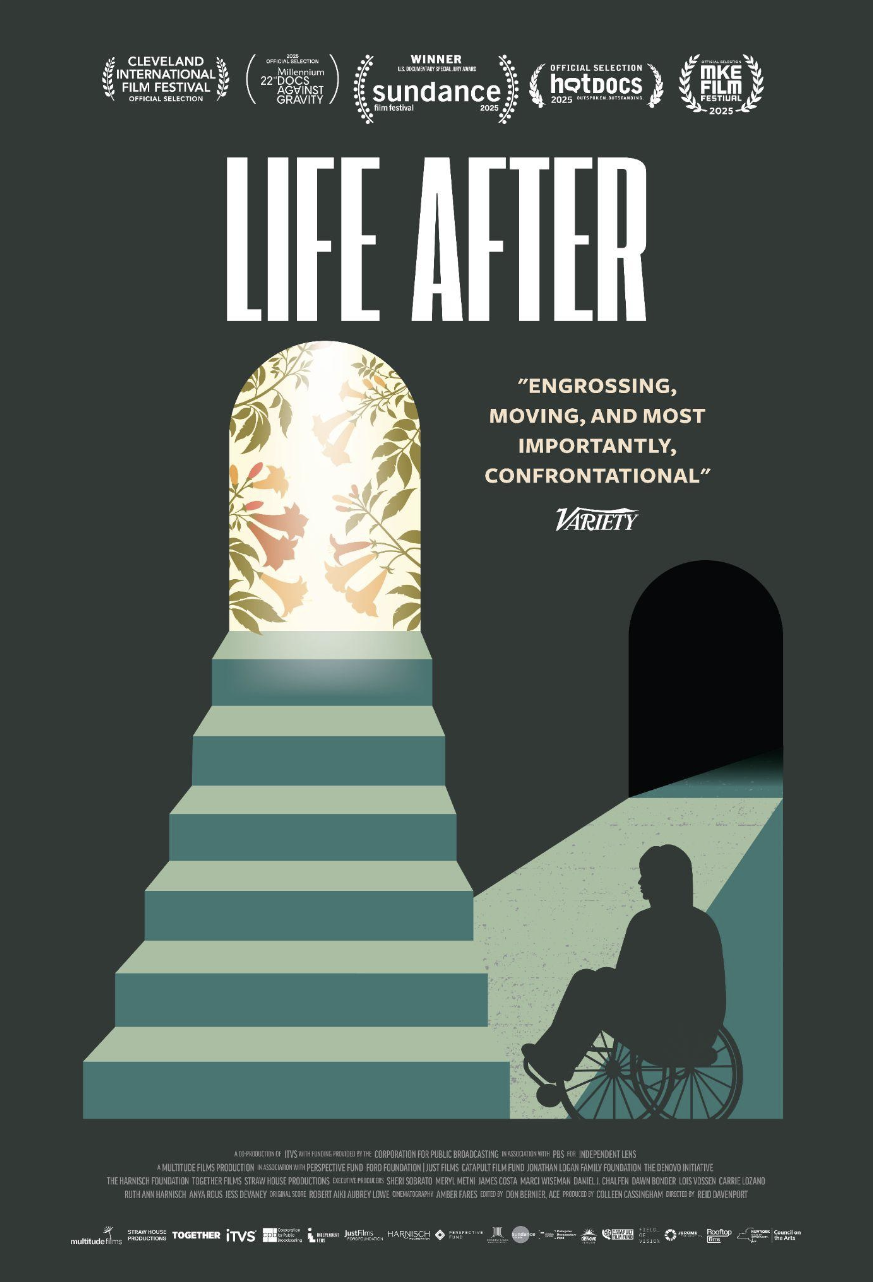
Life After w/ Reid Davenport Filmmaker Q&A
Run Time: 130 min.
TICKETS $15
Doors 6:30 p.m.; Event 7 p.m.
Select Showtime to Purchase Tickets
This screening will be open captioned, and there will be ASL interpretation for the Q&A.
Click here to learn more about accessibility at the Tomorrow Theater.
THE EXPERIENCE
Join us for a screening of Life After, followed by a Q&A with Director Reid Davenport, Cathy Kudlick, Grant Miller, & Jonathan Paradox Lee.
If you are not able to make it to the Tomorrow Theater screening in person, catch the film digitally using these links:
Virtual: Sunday, August 17 8pm PST: Tickets
Virtual: Tuesday, August 19 8pm PST: Tickets
ON SCREEN: Life After
2025. Directed by Reid Davenport. Runtime: 99 minutes.
Life After is a gripping investigative documentary that exposes the tangled web of moral dilemmas and profit motives surrounding assisted dying. Disabled filmmaker Reid Davenport uncovers shocking abuses of power while amplifying the voices of the disability community fighting for justice and dignity in an unfolding matter of life and death.
In 1983, a disabled Californian woman named Elizabeth Bouvia sought the “right to die,” igniting a national debate about autonomy and the value of disabled lives. After years of courtroom battles, Bouvia vanished from public view. Sundance-winner Davenport embarks on a personal investigation to find out what really happened to Bouvia and reveal why her story is disturbingly relevant today.
Life After brings together the missing voices of the disability community in the ongoing debate about assisted dying. Disabled people continue to face premature death—whether through the horrific case of Michael Hickson, who was left to die by a Texas hospital, or the heart-wrenching choice of Jerika Bolen, a Wisconsin teen who received support from her community to end her life. Davenport’s exploration takes him to Canada, where regulations surrounding Medical Aid in Dying (MAID) have been expanded to allow disabled individuals unprecedented access—even when their deaths are not reasonably foreseeable. In Ontario, Davenport meets Michal Kaliszan, a disabled computer programmer who once considered MAID as his only option to avoid entering an institution.
“Surprising, insightful, moving, and politically far-reaching… Made with a personal fervor that never loses sight of reportorial specifics.”
– Richard Brody, The New Yorker“Challenges an able-bodied audience’s preconceptions about the lives of disabled people, as well as upends the expectations of how documentaries are supposed to unfold.”
– Esther Zuckerman, IndieWire“Empathetic and confrontational…weaves a powerful first-person perspective with a journalistic investigation into disability justice…An engrossing, moving and most importantly confrontational movie about the right to die and disability justice.”
– Murtada Elfadl, Variety
ON STAGE:
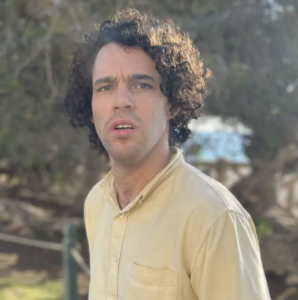 Reid Davenport makes documentaries about disability from an overtly political perspective. Reid’s first two feature films, Life After (2025) and I Didn’t See You There (2022), both premiered at the Sundance Film Festival and respectively won a Special Jury Award and the Directing Award. Variety called Life After “engrossing, moving, and most importantly, confrontational,” while Indiewire said it was “passionate and persuasive… upends expectations.” Nick Allen of Roger Ebert described I Didn’t See You There as “first-person poetry in captivating motion, expressed with a singular, assured artistic voice,” while Vox called it a “must-see.” I Didn’t See You There won the Truer Than Fiction Award at the 2023 Independent Spirit Awards and was broadcast nationally on PBS’s syndicated series POV. Life After is slated to air on PBS’s syndicated series Independent Lens later this year and currently has a 100% rating on Rotten Tomatoes.
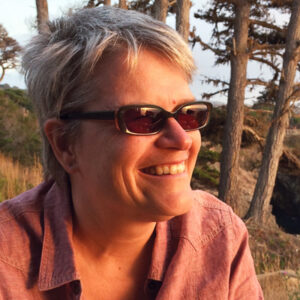 Cathy Kudlick directed the Paul K. Longmore Institute on Disability at San Francisco State University that ran the Superfest Disability Film Festival from 2012-2022. As a professor of history, she published various books and articles on disability history and oversaw completion of Paul Longmore’s posthumously published book, Telethons. She also directed the exhibit Patient No More: People with Disabilities Securing Civil Rights (still on tour and online). In Portland, she’s a founding member of a new community group, Tabor for All, which champions greater accessibility at the beloved park. Throughout, her goal has been to convince the world that society is better because of disabled people.
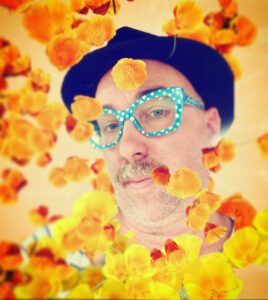 Jonathan Paradox Lee is an Access Artist and Executive Creative Director at The Curiosity Paradox, a creative studio focused on access as a creative endeavor. Jonathan co-founded The Curiosity Paradox in 2018 with CEO and Access Artist Grant Miller. Jonathan is also a Peer Wellness Specialist supporting Central City Concern’s 16xBurnside Recovery Center, a new inpatient recovery center serving the state of Oregon. With a lived experience of recovering from mental health crises and burnout, they are committed to leading by exemplifying their own long-term mental health recovery. With a multi-disciplinary background in creative direction, copywriting, theater, and social justice, Jonathan is passionate about playfulness as a path toward healing.
[Image of non-binary person with fedora, polka dot glasses and mustache. Orange flowers flutter around their face.]
![[Image description: photo is a black and white headshot of Grant – a white person with long wavy hair. They wear a blazer and the hint of a smile. Background is a gorgeous, blurry Ponderosa pine.]](https://s3.amazonaws.com/nightjarprod/content/uploads/sites/243/2025/06/30140321/Grant-Miller-headshot-200x300.jpg) Grant Miller (they/she/he) is an Access Artist and CEO of The Curiosity Paradox—a creative studio with a focus on access for multiply-marginalized Disabled people. A queer, genderfluid, white Disabled person, Grant’s work challenges eugenic cultural design by transforming everyday spaces into sites of creative resistance. Their “Question Access” manifesto (Vancouver Art Gallery, 2022-2023) and ongoing Desire Path Project have influenced access practices internationally. In addition to these projects, Grant is currently working on Access and Artistic Research, a collaboration with Lucy Cotter, a bathhouse cabaret, and other multimedia performance projects. Grant’s work consistently invites audiences to imagine more accessible and anti-ableist futures.
Grant Miller (they/she/he) is an Access Artist and CEO of The Curiosity Paradox—a creative studio with a focus on access for multiply-marginalized Disabled people. A queer, genderfluid, white Disabled person, Grant’s work challenges eugenic cultural design by transforming everyday spaces into sites of creative resistance. Their “Question Access” manifesto (Vancouver Art Gallery, 2022-2023) and ongoing Desire Path Project have influenced access practices internationally. In addition to these projects, Grant is currently working on Access and Artistic Research, a collaboration with Lucy Cotter, a bathhouse cabaret, and other multimedia performance projects. Grant’s work consistently invites audiences to imagine more accessible and anti-ableist futures.