

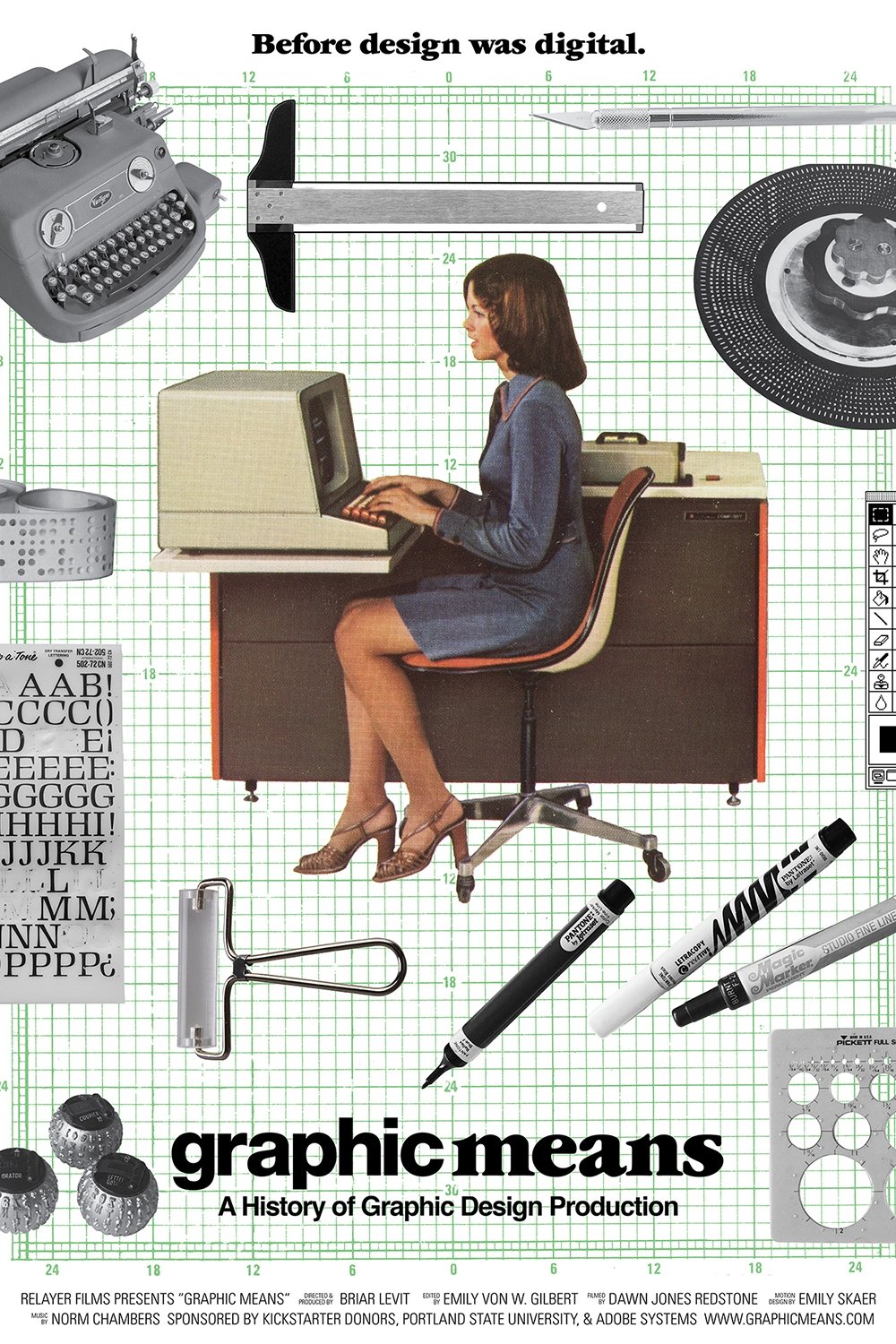
Graphic Means: A History of Graphic Design Production
- Thu, Apr 9
Run Time: 85 min.
TICKETS $15
Doors 6:30 p.m.; Event 7 p.m.
Select Showtime to Purchase Tickets
Click here to learn more about accessibility at the Tomorrow Theater.
✨ Join us Sunday, April 19, @ 10:00 AM for a related hands-on artmaking workshop at PAM CUT
Before Design was Digital // Analog Processes in Graphic Design
THE EXPERIENCE
A special screening of: Graphic Means: A History of Graphic Design Production w/ a panel discussion following the film.
Up until just over 30 years ago, when the desktop computer debuted, the whole design production process would have been done primarily by hand, and with the aide of analog machines. The design and print industries used a variety of ways to get type and image onto film, plates, and finally to the printed page. Graphic Means is a journey through this transformative Mad Men-era of pre-digital design production to the advent of the desktop computer. It explores the methods, tools, and evolving social roles that gave rise to the graphic design industry as we know it today.
ON SCREEN: Graphic Means
2017. Directed by Briar Levit. Runtime: 1hr 24min. Not Rated.
Decades before every desktop had a computer, it was the hands of industrious workers and ingenious tools that brought type and image together. Graphic Means: A History of Graphic Design Production explores the rapid changes in design from the mid-twentieth century through the 1990s—from linecaster to photocomposition, and from paste-up to PDF.
“I figured if I know very little, as someone who started in the late ‘90s, then the young designers of today know almost nothing,” says filmmaker Briar Levit. “That’s why I decided I really needed to make this movie.”
Levit and her team spent years traveling around the US and UK, interviewing design legends like Ellen Lupton, a designer trained to work manually, and now an esteemed design writer and educator; Art Chantry, who still uses analog techniques to make posters and album covers; and Adrian Shaugnessy, publisher of the beloved Unit Editions design books. Digging into archives, university libraries, and even thrift shops to uncover forgotten tools and materials, Graphic Means gives viewers a look at the history of the ever-evolving design industry, and what’s in store for the future.
Though design is more popular than ever, with countless books and magazines dedicated to its new trends and thousands of students hoping to enter the field each year, its history has been largely ignored until now. Graphic Means: A History of Graphic Design Production is a must-see film for anyone who loves design, art, history, or the intersection of all three. Learn more at: graphicmeans.com
ON STAGE: Panel
BRIAR LEVIT: Film’s Creator / Director
Briar Levit is a professor of graphic design at Portland State University in Oregon, USA. Levit’s feature-length documentary,Graphic Means: A History of Graphic Design Production, tells the story of how production technologies and workflows informed graphic design from the analog mid-century to the Digital Revolution at the end of the 20th century. She edited Baseline Shift: Untold Stories of Women in Graphic Design History(2021), which includes the research of 19 scholars including herself. Currently, Levit co-directs The People’s Graphic Design Archive, a crowd-sourced digital archive with an aim to help create more inclusive and participatory design histories.
APRIL GREIMAN: In the film
April Greiman is a pioneering designer and transmedia artist who helped usher graphic design into the digital age. Among the first designers to embrace the personal computer as a creative medium, she recognized early that emerging technologies could expand the possibilities of visual communication.Working across publications, environments, and digital media, Greiman transformed the computer from a production tool into a creative instrument, shaping a new visual language for design in the late twentieth century.
JOSHUA BERGER: In the film
Joshua Berger is a designer, creative director, and artist who believes design can change the world. In 1991 he co-founded Plazm magazine in Portland, an influential publication that helped shape the city’s creative culture and later grew into the award-winning studio Plazm Design. Through Plazm and his work with agencies including Wieden+Kennedy and Liquid Agency, Berger has collaborated with brands such as Nike, MTV, and Lucasfilm, while also helping launch regional successes like Fort George Brewery. His work spans publishing, branding, and cultural projects that often engage social and environmental themes.
DAN RHATIGAN: In the film
Dan Rhatigan is a typographer with eclectic experience as a typesetter, graphic designer, typeface designer, and educator. He went from an MA at the University of Reading to senior roles at Monotype, Adobe Fonts, Type Network, and The Type Founders. He publishes his own typefaces through Bijou Type, and publishes a long-running zine, Pink Mince.
MICHAEL ELLSWORTH: Panel Moderator
Michael Ellsworth is a designer, creative director, and co-founder of the design studio Civilization. His work is grounded in design for advocacy and advocating for design, examining how visual communication functions as a civic and cultural force that shapes public understanding and participation. Ellsworth connects design history, contemporary practice, and the broader public as the founder of Volumes Design Library and an educator at Portland State University, where he supports the student-run Kemeny Design Lecture Series.